The independent heating and cooling company across the Willamette Valley and northwest Oregon
Buzzing, Rattling, or Screeching From the Outdoor Unit
Your outdoor unit used to hum along in the background. Now it buzzes, rattles, or lets out a screech you can hear from inside the house with the windows shut. You want to know if it is about to quit, whether you should turn it off, and what this is going to take. Here is how we sort those noises out across Oregon and Washington.
Call (888) 365-6280- You reach a person, not a menu
- Open every day
- The quote comes first, in writing
Taking calls until 5:00 PM PT
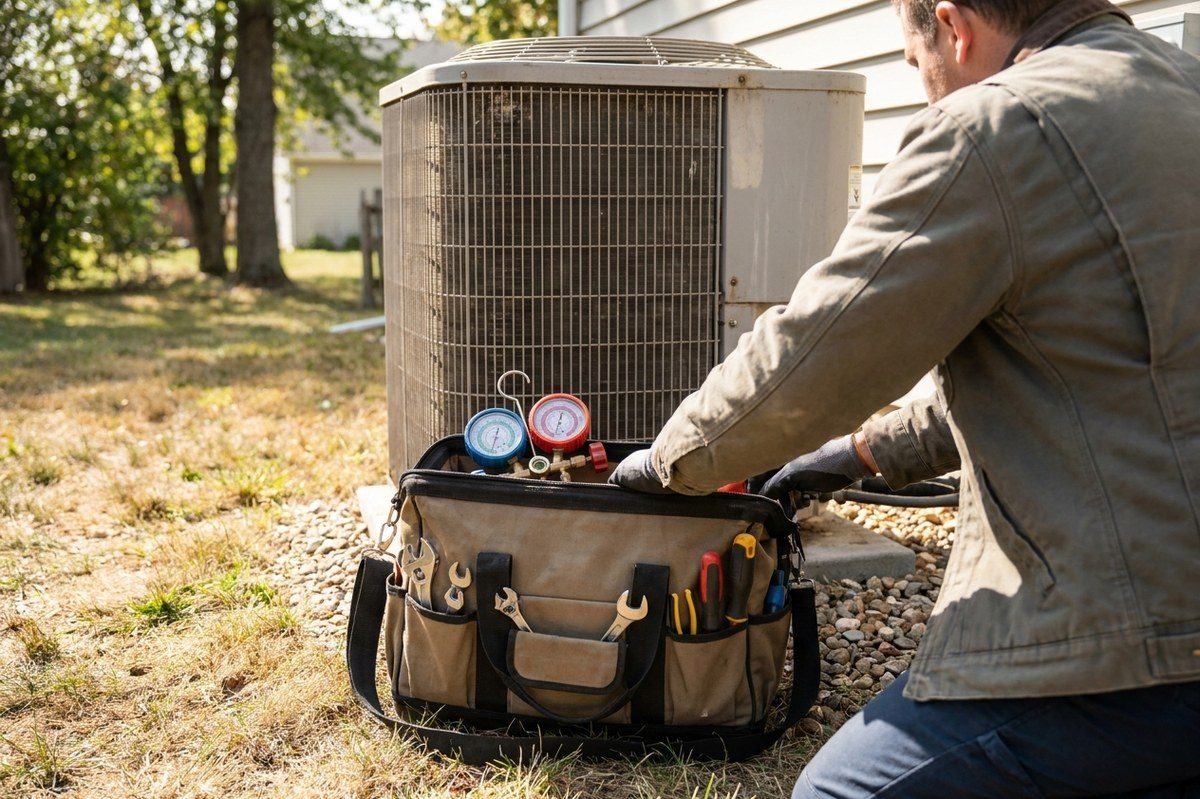
By our service team · vetted by the techs who do this daily
What the Noise Is Actually Telling You
The sound tells us which part is unhappy. A steady buzz usually points to electrical parts, a contactor or a capacitor working hard. A rattle is almost always something mechanical and loose, a panel screw, a fan blade out of balance, or gravel that got kicked into the base. A screech or squeal means metal on metal, often a bearing or a motor that is drying out. A hard clunk at startup is different again and worth a call before you run the system further. None of these fix themselves, but they are not all equally serious, and a rattle caught early is a much smaller job than a rattle ignored all summer.
Loose Hardware and Debris, the Cheapest Cause
Start with the possibility that nothing is broken. Outdoor units live outside, and around the region they collect fir needles, cottonwood fluff, blackberry runners, and the occasional pine cone. Any of that can end up against the fan blade and rattle. Screws back out over years of vibration, and a loose service panel will drum against the cabinet. The condenser fan grille can pick up a twig and buzz like a hornet. These are the repairs that take minutes once someone finds them. If your noise is new, intermittent, and changes when the fan speed changes, loose hardware or debris is the first thing we look at.
Electrical Buzzing and Motor Wear
A constant buzz that starts the moment the unit calls for cooling is usually electrical. Contactors chatter when their contacts pit. Capacitors that are failing let the compressor or fan motor strain, and that strain has a sound to it. Neither is something to open up yourself, because there is stored voltage inside that cabinet even with the breaker off. Screeching and squealing point instead to bearings in the fan motor or a compressor under real stress. Motors give warning before they seize, and replacing a fan motor is a far smaller job than what happens after it locks up and takes the compressor with it. Get it looked at while it is still just a noise.
What You Can Safely Check Yourself
Keep it simple and stay out of the cabinet. Check your thermostat settings and swap the batteries if it has them, since short cycling makes any noise seem worse. Look at your air filter, because a clogged one strains the whole system. Walk out to the outdoor unit and clear leaves, weeds, and yard debris back a couple of feet from all sides, with the system off at the thermostat first. Confirm your supply vents inside are open. Take a look at the breaker, and if it has tripped, reset it once. If it trips again, stop and call us. Do not touch wiring, refrigerant lines, or anything behind a panel.
What We Do Differently on an Air Conditioning Repair Call
We measure instead of guess. On an air conditioner repair for noise, we check amp draw on the compressor and fan motor against what the nameplate says, test the capacitor rather than eyeballing it, and inspect the contactor for pitting. We check refrigerant pressures, because a compressor working against a restriction sounds strained for a reason. We spin the fan by hand to feel bearing play, and we look at how level the pad sits, since a tilted unit vibrates. Then we tell you which parts are failing now and which are simply worn. Same approach applies to heating repair calls on heat pumps, where outdoor noise in winter often traces back to the defrost cycle.
When it is time to book
Buzzing, Rattling, or Screeching From the Outdoor Unit — fast answers
Should I shut the system off until someone comes out?
If you hear grinding, screeching, or a hard clunk, yes. Turn it off at the thermostat and call us. A steady faint buzz is less urgent, but running a failing motor usually turns a small repair into a bigger one.
Why does my heat pump make noise in winter but not summer?
Heat pumps run a defrost cycle in our wet winters, and that involves a reversing valve shifting with a whoosh or clunk plus a burst of steam. Some noise is normal. Repeated loud cycling is not, and we should check it.
Is a buzzing outdoor unit dangerous?
Electrical buzzing means a component is straining, which can eventually trip breakers or burn a contactor. It is not an immediate hazard to you as long as you stay out of the cabinet, but it does need an AC repair visit.
How it works
- Step 1
Tell us the symptom
Call or fill in the quote form. Describe the noise, the smell, the temperature, and when it started. That detail helps us bring the right parts and gives you an honest idea of the visit ahead.
- Step 2
We diagnose on site
A technician checks the thermostat, airflow, electrical connections, refrigerant behaviour and the outdoor unit. We tell you what failed and why, in plain language, before anyone reaches for a part or a price.
- Step 3
You choose the repair
We lay out the fix, any parts on order, and what happens if you wait. Once you agree, we do the work and confirm the system holds temperature before we pack up and leave.
- A real person answers
- Open 7 days
- Written quote before work starts
Why homeowners call us
- Heat pumps are our normalIn this region heat pumps outnumber furnaces, so defrost boards, reversing valves and short cycling in wet weather are everyday work for us. We know how these systems behave in a cold December rain, not just on a test bench.
- Wet winter defrost problemsIce on the outdoor coil, a unit that runs and runs without warming the house, puddles that refreeze under the pad. We trace whether it is a sensor, a stuck valve, drainage, or airflow, then fix the actual cause.
- Filtration after smoke seasonWildfire smoke turned indoor air quality into a real conversation here. We look at filter fit, return sizing and IAQ options that your blower can actually push air through, rather than choking the system with the wrong media.
- We explain before we chargeYou get the diagnosis, the options and the trade-offs before work starts. If a repair is not worth it on an old system, we say so. No pressure, no jargon dumped on you at the door.
- All major brands, gas & electricOne independent crew for Carrier, Trane, Lennox, Goodman, Rheem and more.
- Straight answersNot worth fixing? We say that out loud, and often it saves you the visit fee.
About this guide
If the safe checks didn't fix it, the fault is real
Bring your notes from the checks to the call and booking takes no time.
- A real person answers
- Open 7 days
- Written quotes
- All major brands
- Gas & electric
Rather not call? Get a free quote →