The independent heating and cooling company across the Willamette Valley and northwest Oregon
Why Mismatched Systems Cause Problems
Your outdoor unit quit and someone told you the indoor half has to go too. That sounds like an upsell, and sometimes it is. But often the two halves of a heat pump or AC system are designed to work as a pair, and swapping one alone leaves you with a system that runs badly or not at all. Here is how we sort out which situation you are in.
Call (888) 365-6280- You reach a person, not a menu
- Open every day
- The quote comes first, in writing
Taking calls until 5:00 PM PT
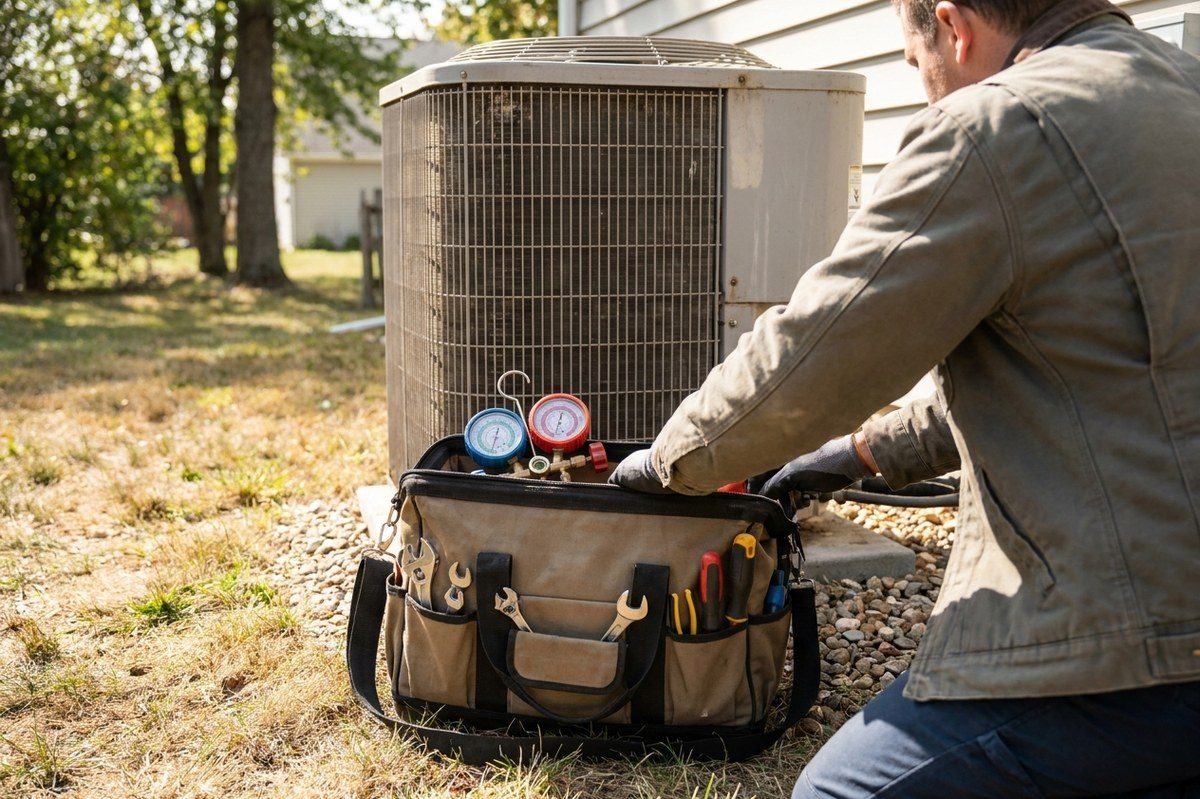
By our service team · vetted by the techs who do this daily
Why the two halves are a pair
A heat pump or air conditioner is one refrigerant circuit split between an outdoor unit and an indoor coil, with a metering device sized for that exact combination. Change the outdoor unit and the old coil may be the wrong volume, the wrong circuiting, or built for a refrigerant that is no longer sold. The result is a system that cools weakly, ices up, short cycles, or trips out on pressure. We see this most often on older equipment where the indoor coil was never touched during earlier repairs. Matching is not brand loyalty. It is making sure the pressures and airflow line up.
Age, fault type, and what usually decides it
Age matters less than what broke. A capacitor, contactor, or defrost board on a fifteen year old heat pump is still worth fixing. A failed compressor or a leaking indoor coil is a different conversation, because those are the expensive halves and they tend to fail near the end of a system's life anyway. Fault type tells us whether we are dealing with a wear item or the core of the machine. We also look at refrigerant type, whether the leak can actually be found and sealed, and how the system has been maintained through our wet winters.
Parts availability across the region
Some parts we can have in hand the same week. Others are discontinued, and that changes the math fast. Older refrigerants have been phased down, so a large recharge on a leaking system may not be practical or available. Control boards on discontinued models sometimes only exist as salvage. When we hit a wall like that, we tell you plainly rather than stringing out a repair that will fail again in a month. Homeowners across Oregon and Washington ask us to be straight about this, and it is the fastest way to a decision you will not regret.
How we think about it on a visit
We start with the actual fault, not the age sticker. That means measuring pressures and temperature split, checking airflow and static pressure, reading the defrost sequence if it is a heat pump, and looking at the indoor coil and blower. Then we ask three things. Can this be repaired with parts we can get? Will the repair hold given the condition of the rest of the system? And if you replaced the outdoor unit alone, would the existing coil and metering device work with it? You get the answers in plain language, with the repair option priced alongside replacement so you can compare.
Honest cases where replacement wins
Replacement is the better call when the compressor is dead on an older system, when the indoor coil is leaking and the refrigerant is hard to source, or when a previous mismatched swap has left the system running outside its design range. It also wins when the ductwork and equipment were never matched to the house and no repair will fix comfort in the far bedrooms. Smoke season pushed a lot of homeowners toward better filtration, and a replacement is the natural moment to size the blower and filter cabinet for that. If none of those apply, we repair it and move on.
Why Mismatched Systems Cause Problems — fast answers
Can I just replace the outdoor unit and keep my indoor coil?
Sometimes, if the coil is in good shape, uses the same refrigerant, and matches the new unit's capacity and metering device. Often it does not, and the mismatch shows up as weak cooling, icing, or repeat failures within a season.
Does a mismatched system void anything?
Manufacturers generally will not honour warranty coverage on equipment installed outside its listed matched combinations. We check the pairing before we quote so you are not surprised later. Ask us to show you the match on paper.
My system is old but working. Should I replace it now?
No, not while it runs well and parts are still available. We would rather keep it maintained and watch for the fault types that signal the end. Planning ahead beats an emergency decision in January.
How it works
- Step 1
Tell us the symptom
Call or fill in the quote form. Describe the noise, the smell, the temperature, and when it started. That detail helps us bring the right parts and gives you an honest idea of the visit ahead.
- Step 2
We diagnose on site
A technician checks the thermostat, airflow, electrical connections, refrigerant behaviour and the outdoor unit. We tell you what failed and why, in plain language, before anyone reaches for a part or a price.
- Step 3
You choose the repair
We lay out the fix, any parts on order, and what happens if you wait. Once you agree, we do the work and confirm the system holds temperature before we pack up and leave.
- A real person answers
- Open 7 days
- Written quote before work starts
Why homeowners call us
- Heat pumps are our normalIn this region heat pumps outnumber furnaces, so defrost boards, reversing valves and short cycling in wet weather are everyday work for us. We know how these systems behave in a cold December rain, not just on a test bench.
- Wet winter defrost problemsIce on the outdoor coil, a unit that runs and runs without warming the house, puddles that refreeze under the pad. We trace whether it is a sensor, a stuck valve, drainage, or airflow, then fix the actual cause.
- Filtration after smoke seasonWildfire smoke turned indoor air quality into a real conversation here. We look at filter fit, return sizing and IAQ options that your blower can actually push air through, rather than choking the system with the wrong media.
- We explain before we chargeYou get the diagnosis, the options and the trade-offs before work starts. If a repair is not worth it on an old system, we say so. No pressure, no jargon dumped on you at the door.
- All major brands, gas & electricOne independent crew for Carrier, Trane, Lennox, Goodman, Rheem and more.
- Straight answersNot worth fixing? We say that out loud, and often it saves you the visit fee.
About this guide
When the easy checks change nothing, it's time for a tech
Mention which checks you ran when you book; it speeds up the visit.
- A real person answers
- Open 7 days
- Written quotes
- All major brands
- Gas & electric
Rather not call? Get a free quote →