The independent heating and cooling company across the Willamette Valley and northwest Oregon
Getting Cooling Ready Before the First Hot Week
You know the week we mean. It sits in the fifties and rainy for a month, then jumps to ninety on a Tuesday and every house in the region turns on cooling at once. If your AC or heat pump has been asleep since last September, that first hot afternoon is when you find out what broke over the winter. Here is what to check before then.
Call (888) 365-6280- You reach a person, not a menu
- Open every day
- The quote comes first, in writing
Taking calls until 5:00 PM PT
By our service team · vetted by the techs who do this daily
What Our Winters Do to a Cooling System
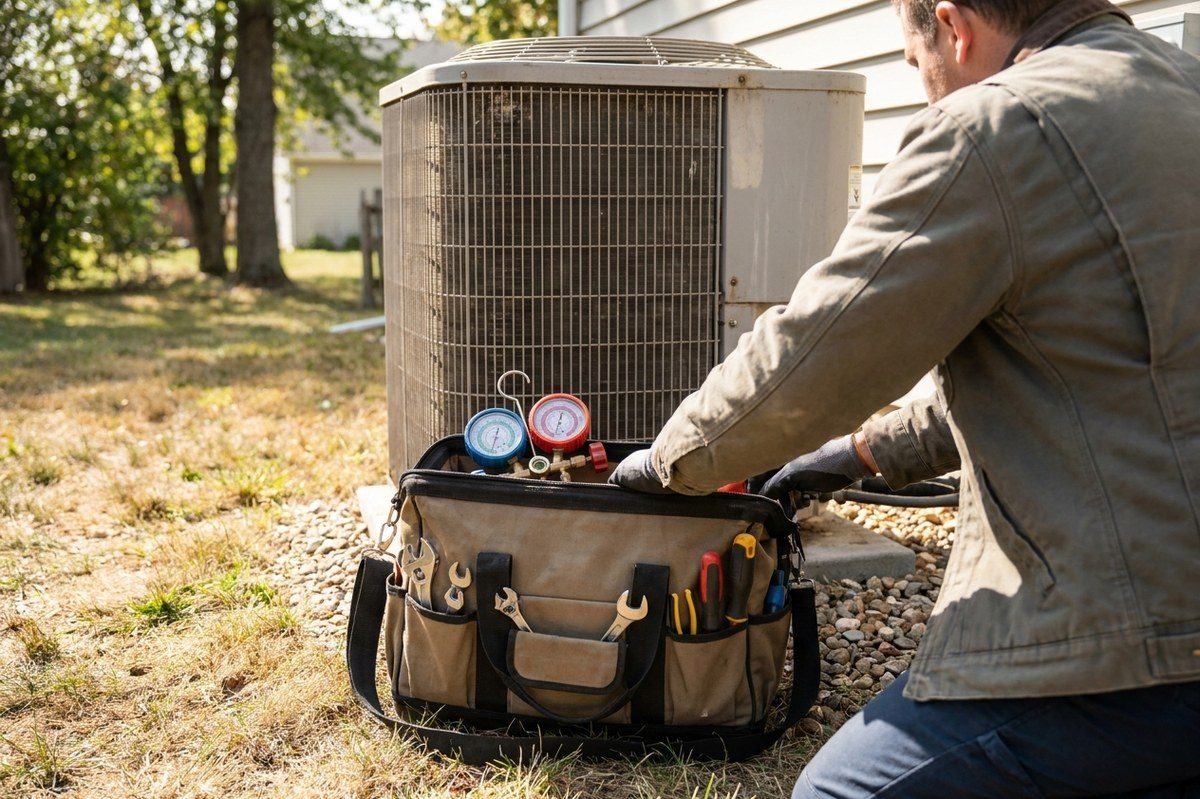
Cooling equipment across Oregon and Washington sits outside through months of rain, wind and leaf litter. Water is not the problem by itself. The problem is what water carries: fir needles, moss, cottonwood fluff and mud packed into the coil fins until air cannot move through them. Rodents move into the cabinet looking for a dry spot and chew wire insulation. Condensate drains grow biofilm and clog. On heat pumps, a defrost board or reversing valve that struggled through January often fails the first time it is asked to run in cooling. None of that shows up until you actually call for cold air.
Which Failures Spike, and When
Late May through the first week of real heat, we mostly see systems that will not start. Failed capacitors, seized condenser fan motors, contactors welded shut, and outdoor units with no power because a breaker tripped last fall and nobody noticed. Once temperatures hold in the nineties, the calls shift to systems that run but cannot keep up: low refrigerant charge from a slow leak, restricted coils, and undersized airflow from a filter nobody changed. Smoke season in August brings a third wave, when heavy filtration chokes airflow and the indoor coil freezes. Different problem, same symptom of warm air at the vents.
The Pre-Season Checks Worth Doing Yourself
Five things, all safe, all useful. Change the filter and note the size so you can buy spares before you need them. Walk the outdoor unit and clear leaves, blackberry canes and anything growing within a couple of feet of the cabinet. Check that the breaker for the outdoor unit is on. Put fresh batteries in the thermostat and set it to cool, then confirm the outdoor fan spins within a few minutes. Walk the house and open every supply and return vent, including the rooms you keep closed. Stop there. Refrigerant, gas and high voltage are ours to handle.
When to Call Instead of Waiting
Call us if the outdoor unit hums but the fan does not turn, if the indoor blower runs and the air is only mildly cool, if you see ice on the refrigerant lines or the indoor coil, or if the breaker trips again after you reset it once. Those are all signs of something that gets worse under load, and running the system anyway usually turns a small repair into a compressor. The same goes for water pooling near the indoor unit. We handle air conditioning repair and heat pump work across Oregon and Washington, and a call in May gets a faster slot than a call in July.
Filtration, Airflow and Smoke Season
Wildfire smoke made filtration a real conversation in our area, and the tradeoff is worth understanding before August. A denser filter catches more fine particulate, and it also makes the blower work harder. In a system with tight ductwork or a dirty coil, that shows up as weak airflow, short cycling, or a frozen coil on the hottest day. The fix is not always a cheaper filter. Sometimes it is cleaning the coil, sometimes it is a properly sized filter cabinet so you get better filtration without strangling the return. Ask us to look at airflow in spring, not during the first smoke advisory.
Getting Cooling Ready Before the First Hot Week — fast answers
How often should cooling get a professional look?
Once a year, ideally in spring before the first hot stretch. Heat pumps run year round, so they see roughly twice the hours of a cooling-only AC and benefit most from an annual check of charge, airflow and defrost operation.
My AC worked fine last September. Why would it fail now?
Most cooling failures happen at startup, not during steady running. Capacitors, contactors and fan motors weaken over a winter of sitting idle, then give out the first time the system is asked to pull real load.
Should I cover my outdoor unit over winter?
A full wrap traps moisture and invites rodents. If you want to keep debris out, use a breathable top cover only, and remove it completely before you run cooling. Heat pumps should never be covered at all.
How it works
- Step 1
Tell us the symptom
Call or fill in the quote form. Describe the noise, the smell, the temperature, and when it started. That detail helps us bring the right parts and gives you an honest idea of the visit ahead.
- Step 2
We diagnose on site
A technician checks the thermostat, airflow, electrical connections, refrigerant behaviour and the outdoor unit. We tell you what failed and why, in plain language, before anyone reaches for a part or a price.
- Step 3
You choose the repair
We lay out the fix, any parts on order, and what happens if you wait. Once you agree, we do the work and confirm the system holds temperature before we pack up and leave.
- A real person answers
- Open 7 days
- Written quote before work starts
Why homeowners call us
- Heat pumps are our normalIn this region heat pumps outnumber furnaces, so defrost boards, reversing valves and short cycling in wet weather are everyday work for us. We know how these systems behave in a cold December rain, not just on a test bench.
- Wet winter defrost problemsIce on the outdoor coil, a unit that runs and runs without warming the house, puddles that refreeze under the pad. We trace whether it is a sensor, a stuck valve, drainage, or airflow, then fix the actual cause.
- Filtration after smoke seasonWildfire smoke turned indoor air quality into a real conversation here. We look at filter fit, return sizing and IAQ options that your blower can actually push air through, rather than choking the system with the wrong media.
- We explain before we chargeYou get the diagnosis, the options and the trade-offs before work starts. If a repair is not worth it on an old system, we say so. No pressure, no jargon dumped on you at the door.
- All major brands, gas & electricOne independent crew for Carrier, Trane, Lennox, Goodman, Rheem and more.
- Straight answersNot worth fixing? We say that out loud, and often it saves you the visit fee.
About this guide
If the safe checks didn't fix it, the fault is real
Mention which checks you ran when you book; it speeds up the visit.
- A real person answers
- Open 7 days
- Written quotes
- All major brands
- Gas & electric
Rather not call? Get a free quote →